
Short answer: a moderate user needs about 2 to 4 GB for 3 days in Japan, 4 to 7 GB for a week, 6 to 10 GB for 10 days, 8 to 14 GB for two weeks and 15 to 25 GB for a month. For a one- or two-week trip, buy the 15 GB, 30-day plan.
| Trip length | Data for a moderate user | Cheapest Japan plan that covers it | Price |
|---|---|---|---|
| 3 days | 2–4 GB | 5 GB, 15 days | $7.49 |
| 7 days | 4–7 GB | 10 GB, 30 days | $9.99 |
| 10 days | 6–10 GB | 10 GB, 30 days | $9.99 |
| 14 days | 8–14 GB | 15 GB, 30 days | $15.99 |
| 30 days | 15–25 GB | 30 GB, 30 days | $28.99 |
If you stream video or tether a laptop, size from the heavy-user column in the full table further down this guide.
Japan is usually a single-country trip. You fly into Tokyo or Osaka, ride the trains, maybe day-trip to Kyoto or Hakone, and you leave from the same country you entered. That makes the buying decision different from a multi-country Europe loop. For Japan, the useful questions are simpler: how much data do you actually need, how many days should the plan cover, and when does the validity clock start relative to install.
This guide walks through those choices in plain language. Plan details change, so treat the live listing on each product page as the source of truth before you buy. Browse current Japan options on Easy Travel Data’s Japan catalog filter or the Japan category.
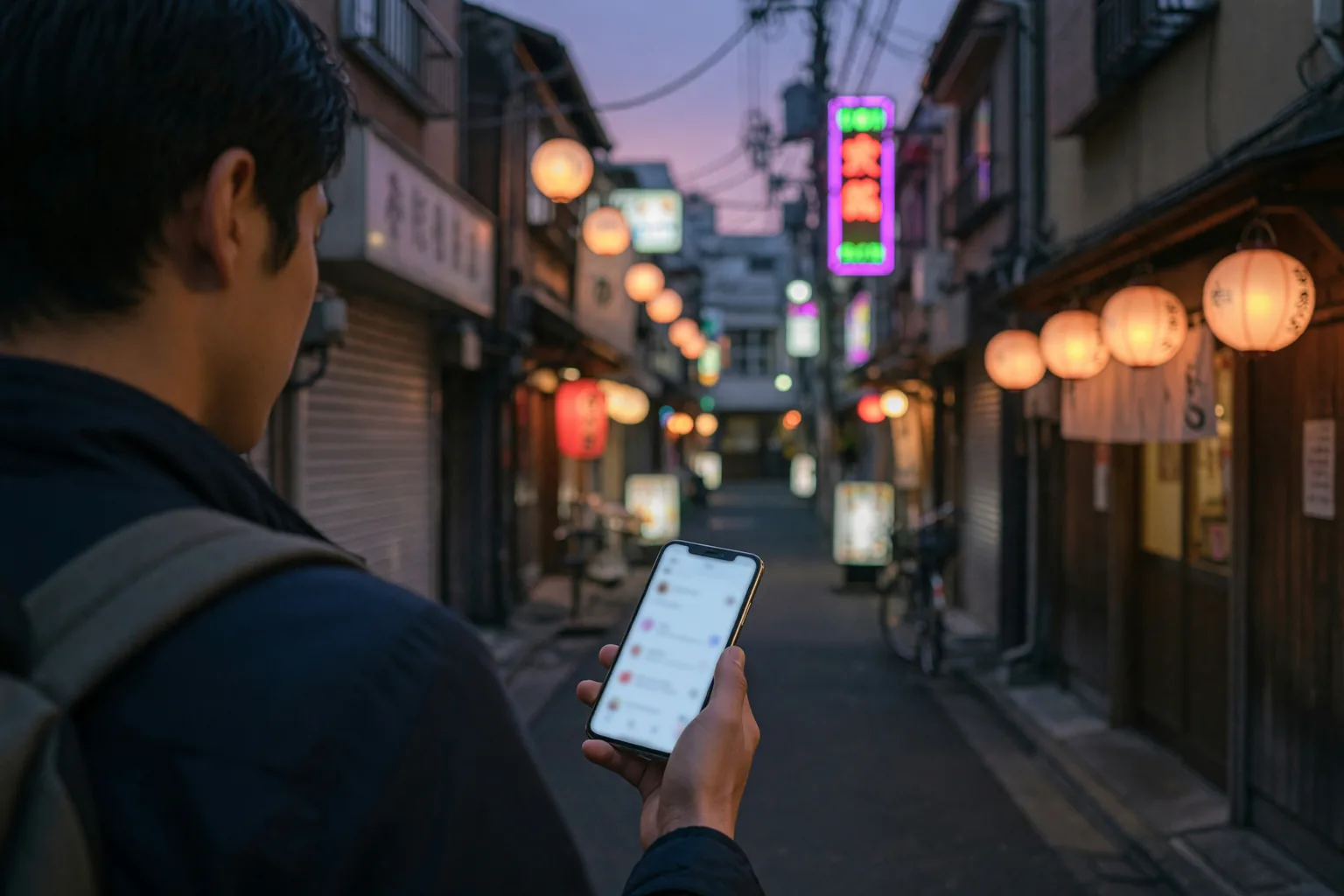
What “Japan coverage” usually means
A Japan travel eSIM is a prepaid data plan meant to attach to Japanese networks under one digital SIM profile. Most shoppers want Japan-only coverage: one country, one install, data for maps, transit apps, translations, and messaging.
Some shoppers also see Asia regional packs that list Japan alongside neighbors such as South Korea or China. Those can make sense if your itinerary truly spans more than one country. They are the wrong default if you are only visiting Japan. You often pay for a wider footprint you will not use, and you still have to confirm Japan is on that specific SKU’s country list.
Before checkout:
- Open the product page and confirm Japan appears in the coverage list.
- If the plan is regional, confirm every other country you will visit is listed too.
- Do not assume “Asia” on a banner includes every destination on your map.
Coverage lists are wholesale partnerships, not tourist geography. Always verify the published list on the plan you are about to buy.
What the live Japan listings look like
Abstract advice only goes so far, so here is the shape of the Japan category as it stands on 30 September 2026: 27 plans from four suppliers, priced between $5.49 and $83.99. Every one of them lists hotspot as allowed, which is not true of every destination we sell. Three things separate them, and none of the three appears in the headline price.
Top-ups are the exception, not the rule
Only four of the 27 Japan plans can be topped up, and they all come from one supplier. The other 23 cannot. Running out of data on a plan that does not top up leaves you buying a second eSIM and installing it, which is exactly the mid-trip errand you bought ahead to avoid. Unless the product page says top-up is available, size the first purchase for the whole stay.
Where your traffic comes out
Japan plans do not all route through Japan. Current listings show Japan, Singapore or Hong Kong as the exit point depending on supplier, and some publish none at all. For maps, messaging and translation this makes no practical difference. It matters when a service checks where you appear to be: a domestic booking site, a bank, or a video catalogue with regional rights. Only the plans that publish Japan as the exit point will look Japanese to those services, and the field is on the product page.
Same data, different days
The two cheapest 10 GB plans are $9.99 for 30 days and $10.99 for 15 days, so the longer plan is the cheaper one. The other two suppliers charge $14.99 and $17.99 for the same 10 GB. At this size the days column and the supplier matter more than the GB figure you searched for.
| Plan shape | From (prices checked 30 September 2026) | Worth knowing |
|---|---|---|
| 3 GB / 5 days | $5.49 | The shortest Japan option. No top-up. |
| 5 GB / 15 to 30 days | $7.49 | Three suppliers at this price, with different exit countries and day counts. |
| 10 GB / 30 days | $9.99 | A 15-day version costs $10.99, so the longer plan is the cheaper one. |
| 20 GB / 30 days | $17.99 | Comfortable for two weeks of navigation plus some tethering. |
| 50 GB / 30 days | $37.99 | Long stays, or one phone shared with a laptop all day. |
| Unlimited day passes, 3 to 10 days | $14.99 to $31.99 | Read the fair-use wording on the listing. |
Wholesale costs move and so do these numbers. Treat the table as a map of the shapes on offer, and the Japan category page as the price.
How much data is enough for a Japan trip?
Data needs vary more by habits than by destination. On a Japan trip, common heavy uses include:
- Live navigation and transit transfers
- Photo uploads and messaging with family
- Translation apps and restaurant lookups
- Hotel or café Wi‑Fi that is slow, capped, or awkward to join

Light users who mostly stay on hotel Wi‑Fi and open maps occasionally can get by with a smaller bucket. Travelers who navigate all day, share photos, and keep hotspot on for a laptop usually want a larger plan, or a clear top-up path if the plan allows it.
A practical way to choose:
- Estimate your trip length in days first (see the next section).
- Decide whether you will tether a laptop or tablet.
- Prefer a size that covers the whole stay with a little headroom rather than the absolute smallest SKU, if running out mid-trip would stress you.
- If the product page offers top-ups, note that; if it does not, size the first purchase for the full trip.
Avoid shopping by “everyone’s average price per GB” screenshots from other sites. Wholesale costs move. Compare the live GB, days, hotspot rules, and activation trigger on the Japan plans you are actually considering.
| Trip length | Light user | Moderate user | Heavy user |
|---|---|---|---|
| 3 days | 1–2 GB | 2–4 GB | 5–8 GB |
| 7 days | 2–3 GB | 4–7 GB | 9–15 GB |
| 10 days | 3–5 GB | 6–10 GB | 13–20 GB |
| 14 days | 4–7 GB | 8–14 GB | 18–28 GB |
| 30 days | 8–15 GB | 15–25 GB | 30–50+ GB |
Japan pushes most people towards the moderate column. Train transfers mean live navigation in short bursts all day, station Wi‑Fi often needs a captive-portal login you will not bother with twice, and translation apps run on data unless you download the language pack before you go. Downloading offline maps for Tokyo, Kyoto and Osaka on hotel Wi‑Fi is the single cheapest thing you can do to move yourself down a column.
Validity: match days to the whole trip, not just the first city
Validity is the number of days the plan stays usable once it starts. Japan itineraries are often 5, 7, 10, or 14+ days, with airport days on both ends. Buy for the calendar you will actually be in Japan, including arrival and departure, not only the “sightseeing” middle.
Watch for two common mismatches:
- Too short. A 5-day plan on an 8-day stay leaves you offline for the last cities or the airport morning.
- Too long and unused. A 30-day plan is fine if the price is acceptable and you might extend; it is wasteful only if a shorter SKU clearly fits and costs less for the same data.
If you might add a day trip that keeps you in Japan, you are still inside one country. Validity length matters more than regional width. If you might hop to Korea or China after Tokyo, that is when a multi-country Asia pack (with Japan explicitly listed) becomes relevant instead of a Japan-only plan.
Install before you fly vs when the plan starts

Installation and “plan start” are often different moments. Many travel eSIMs let you install the profile on home Wi‑Fi days before departure, then begin counting validity only on first connection at the destination. Some plans start earlier, for example on install or on first network attach, so the product page wording matters.
For Japan trips, the calm pattern is usually:
- Buy ahead of time so the QR arrives by email while you still have reliable Wi‑Fi.
- Install on your phone before you leave home.
- Keep the eSIM data line off until you land (or until you need it), if the plan starts on first use.
- On arrival, enable the eSIM for data and turn on data roaming for that line only, while keeping your regular SIM for calls and texts if you want your home number.
Step-by-step for iPhone and Android, plus common mistakes: How to Install a Travel eSIM Before Your Flight.
Do not delete the eSIM after install hoping to “save” it for later on another phone. Most travel eSIM QR codes work once, on one device.
Japan-only vs Asia multi-country: a quick fork
Choose Japan-only when:
- Your entire trip stays in Japan
- You want the simplest coverage story
- You are optimizing for data size and days inside one country
Consider an Asia multi-country pack when:
- You will visit Japan plus at least one other listed country on the same plan
- You prefer one install across that short multi-country loop
- You have checked that every stop, including Japan, is on that SKU’s list
If the regional list is wider than your route and a Japan-only plan covers your days and data more cleanly, Japan-only is usually the calmer buy.
The price gap is smaller than most people expect. A Japan-only 10 GB plan starts around $9.99; a South Korea and Japan 10 GB plan covering both countries for 30 days is listed at $12.99. That is about three dollars for the second country. Every multi-country pack on the site that includes Japan also includes South Korea, and nearly three quarters of them add mainland China, so the fork is really between one country and a Japan-plus-Korea corridor rather than between narrow and wide.
If Korea is even a maybe. Buying the Japan-only plan and adding Korea later means a second purchase, a second install, and paying twice for the days that overlap. Three dollars up front is usually the cheaper hedge.
A simple decision checklist
- List every country on the trip. If it is only Japan, start with Japan-only plans.
- Count calendar days from arrival through departure, then pick validity that covers them.
- Size data for maps, messaging, and whether you will hotspot.
- Read the activation rule: install time versus first connection.
- Install on Wi‑Fi before you fly; verify Japan (and any other stops) on the product page before you pay.
FAQ
Can I top up a Japan eSIM if I run out?
Usually not. Only four of the 27 Japan plans listed on 30 September 2026 support top-ups, and they all come from one supplier. On every other Japan plan, running out means buying and installing a second eSIM. Check the top-up field on the product page before you size your purchase down.
Will a Japan eSIM give me a Japanese IP address?
Only some of them. Japan plans exit through Japan, Singapore or Hong Kong depending on the supplier, and the exit country is published on the product page. Maps and messaging do not care. Domestic booking sites, banks and region-locked video do, so check that field if you need to look like you are in Japan.
Do Japan plans allow hotspot?
Every Japan plan currently listed allows hotspot. That is worth confirming on the page for the plan in your cart, because it is not true of every destination, but for Japan it is the norm rather than something you have to hunt for.
Is an unlimited day pass better than a GB bucket?
It depends on how long you stay. The unlimited passes run 3 to 10 days and cost $14.99 to $31.99, so they are competitive on a short trip where you would otherwise buy a large bucket for a few days. Over a 14-day stay a 15 GB plan at $15.99 is usually the cheaper shape. Read the fair-use wording either way.
Should I buy a Japan plan or an Asia regional plan?
Buy Japan-only if the trip stays in Japan. Every regional pack that lists Japan also lists South Korea, so a regional plan only earns its price if Korea, China or another listed stop is genuinely on your route. Confirm each stop on that SKU’s own coverage list before paying.
Soft next step
For most Japan trips in 2026, a Japan-only travel eSIM sized to your full stay is the straightforward choice. Stretch to a multi-country Asia plan only when your itinerary truly leaves Japan and those countries appear on the same coverage list. Install early, start carefully, and always confirm the live details on the plan page.
For a full breakdown, see our calculator-style guide, how much data you need for your trip, which works through it by habit and trip length; eSIM vs Physical SIM vs International Roaming compares the real cost of each option. iPhone users can follow the iPhone dual-SIM setup guide.
Compare current Japan options on Easy Travel Data’s Japan catalog, browse the Japan category, or start from the homepage. Always verify coverage, data, validity, and activation on the product page for the plan you buy.