
You are going abroad, and your phone needs data the moment you land. Three options keep appearing: turn on international roaming from your home carrier, buy a local physical SIM at the airport, or download a travel eSIM before you fly. Everyone has an opinion. Affiliates push whichever brand pays them best. Your carrier support agent will tell you roaming is “simple”.
Counting everything changes which option is actually cheapest.
The short version: for most travellers taking a trip of three days or more, a travel eSIM is the cheapest option on real cost, usually by a wide margin. Roaming day passes look convenient until you do the math: typical daily fees of $10 to $15 add up to $70 to $150 for a one- to two-week trip. Airport physical SIMs have lower headline prices but carry hidden costs in queue time, deposits, registration friction and the risk of losing access to your own number. A prepaid travel eSIM sits in the middle: you pay once before you fly, you land already online, and there is no bill waiting for you at home.
This guide compares all three properly. No affiliate ranking, no invented reviews – just the cost structure, worked through with three real trip scenarios. Plan details change, so treat the live listing on each product page as the source of truth before you buy. Browse current options on the Easy Travel Data catalog.
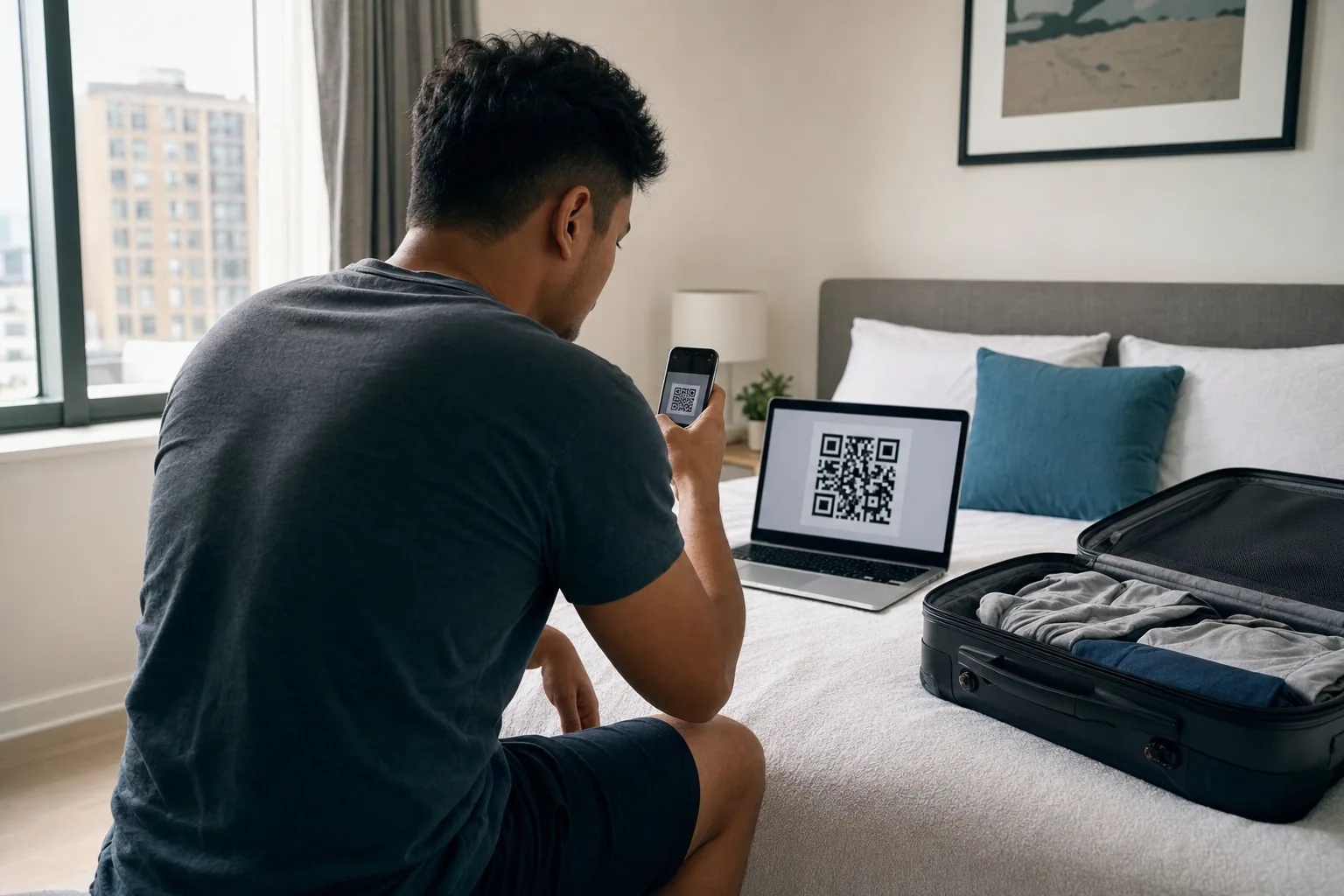
The short answer: which one wins on real cost
If you only want the verdict, here it is:
| Option | Best for | Real total cost for a 2-week trip (typical) | Watch out for |
|---|---|---|---|
| Travel eSIM | Most leisure trips of 3+ days, multi-country itineraries, anyone who wants to land already online | $15–$45, paid once upfront | Phone must be unlocked and eSIM-compatible (iPhone XS+, Pixel 3+, Galaxy S20+) |
| Local physical SIM | Very long stays (a month+) in one country, phones that cannot use eSIM, travellers who want a local phone number | $25–$60 plus 30–90 minutes of queue and admin time | Airport queues, passport registration, deposits, losing your own number while the foreign SIM is in |
| Carrier international roaming | One-day side trips, emergency backup, people who genuinely do not mind paying for convenience | $140–$300+ via daily passes | Daily fees compound; “unlimited” often throttles after a few GB |
The pattern is consistent across most destinations we modelled in 2026: eSIM wins on price for typical holidays, roaming only wins on convenience for very short trips, and physical SIMs win mainly for long single-country stays. The rest of this guide shows exactly why, with numbers you can check yourself.
What you are actually comparing
Before the arithmetic, it helps to name what each option really is – because marketing blurs the lines.
International roaming means your home carrier keeps your line active and rents you data from a partner network abroad. You keep your number, your calls and texts work normally, and the charges appear on your regular monthly bill. The trap is the pricing shape: roaming is almost never sold as a flat holiday rate. It is sold as a daily add-on that renews every 24 hours, whether you use it or not.
A local physical SIM. This is a plastic card you buy at your destination – typically at the arrivals hall, a convenience store or a carrier shop. You take your home SIM out, put the new one in, and for the duration you have a local number and local rates. When you go home, you swap back.
A travel eSIM. This is a digital SIM profile you download before you leave. You scan a QR code, your phone gains a second line for data, and your original SIM stays where it is. Only data travels through the new line; your own number still receives calls and texts. There is no plastic, no store visit and nothing to remove when the trip ends.
Those last two sentences explain most of the cost difference. With roaming, you pay your home carrier’s premium for the privilege of staying on their billing system. With a physical SIM swap, you pay less per GB but you pay in time, friction and risk. With an eSIM, you get local-style pricing while keeping both lines active – the middle path is the one that avoids everyone else’s markup.
The real cost of international roaming
Roaming feels cheap until you multiply.
Major US and UK carriers typically charge a daily fee to use your domestic allowance abroad – commonly around $10 per day in the United States and roughly £5–£6 per day from UK operators. Some markets go higher, toward $15 a day. These passes renew every 24 hours. Crucially, they usually renew from the first use abroad, and they charge for partial days just like full ones.
Worked examples:
- 7-day trip: $10 × 7 = $70. For a week you often pay nearly as much as a flight-side SIM that includes far more data.
- 14-day trip: $10 × 14 = $140. Now you are well above the price of most prepaid travel eSIMs for the same period.
- 21-day trip: $10 × 21 = $210. At this point roaming is hard to justify unless convenience is genuinely worth more to you than the price gap.
And the headline fee is not the whole story. Many “roam-free” or “included allowance” deals quietly cap your data at a low throttle threshold – 5 GB, sometimes less – before slowing you to near-useless speeds. Streaming, maps and video calls eat through those caps faster than you expect. If you exceed them, some carriers bill per-GB overage on top of the daily fee, which is how a “$10 a day” promise becomes a two-hundred-dollar surprise on your next statement.
There is also a behavioural tax people forget: because roaming is always on, background updates, cloud photo sync and app refresh happen at home-carrier rates the whole time you are away. A physical SIM or eSIM lets you choose exactly what uses data. Roaming does not give you that choice unless you manually hunt down every sync setting.
When roaming is still the right call: a single-day crossing (the Eurostar commute, a quick border run, a cruise port stop where you step ashore for six hours), or genuine emergencies when your other options have failed. As a primary plan for a proper holiday, the math rarely survives contact with a calendar.
Local physical SIM: cheap on paper, expensive in practice
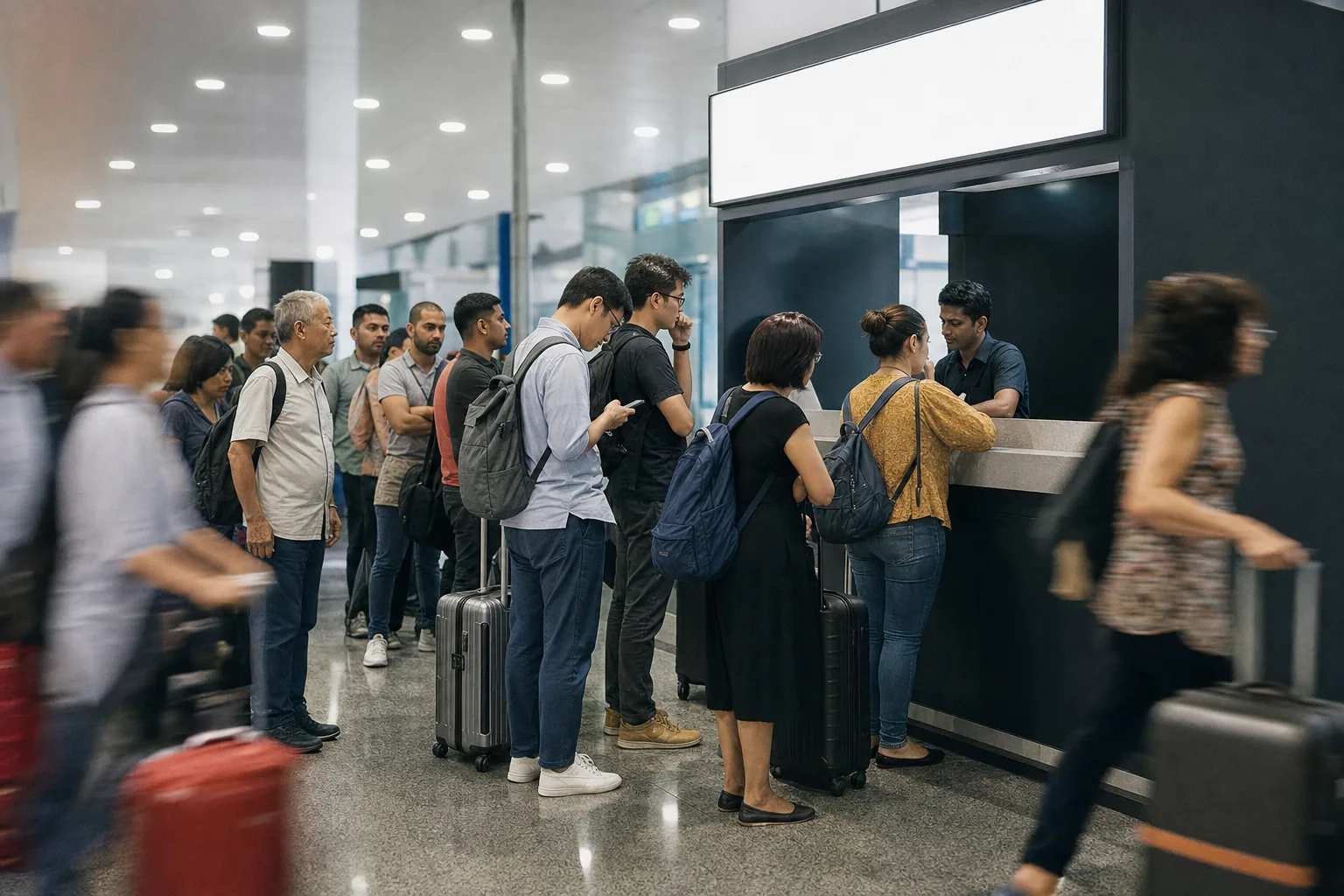
Airport SIM kiosks know exactly what they are selling: relief. You have been on a long flight, you want Google Maps working now, and the person behind the counter offers you a tourist SIM for the equivalent of $20. It looks like a bargain next to roaming, and on pure megabytes-per-dollar it often is.
The full invoice looks different:
| Cost element | Typical value | Who pays attention to it |
|---|---|---|
| SIM pack price | $15–$35 for a tourist bundle | Everyone – it is printed on the poster |
| Queue and admin time | 20–60 minutes on arrival, longer in peak season | Almost nobody, yet it is the first hour of your holiday |
| Passport registration | Required in many countries (Thailand, Turkey, parts of Europe); adds steps | Travellers who assumed it was instant |
| Deposit or minimum top-up | Common with airport vendors; non-refundable in practice | First-time buyers |
| Lost access to your own number | Your phone cannot receive your home calls, texts or 2FA codes while the foreign SIM is in | People expecting the bank verification code to arrive |
| Risk of losing or damaging your home SIM | Tiny plastic, easy to misplace during the swap | Anyone who has fumbled a SIM tray in an airport |
| Data depletion without a top-up path | If you run out, you must find a shop again | Repeat visitors to the same destination |
There are legitimate reasons to choose a physical SIM anyway. Long stays of a month or more in a single country often make a local plan unbeatable on price per GB. Some countries restrict eSIM availability, and older or budget phones simply cannot use eSIM profiles. Travellers who need a local number for restaurant reservations, ride-hailing drivers or local registrations will find physical SIM bundles that include minutes.
But for a standard one- to two-week holiday, the arithmetic flips once you value your time. An hour spent queuing, filling in registration forms and swapping cards is an hour of your first day gone – and if anything goes wrong (wrong APN settings, a phone that will not read the card, a vendor who sold you the wrong bundle), you are troubleshooting on the pavement outside baggage reclaim instead of checking into your hotel.
Travel eSIM: the middle path that usually wins

A travel eSIM is a prepaid data plan delivered as a downloadable SIM profile. You buy it online, receive a QR code by email within minutes, scan it on Wi-Fi at home, and switch the new line on when you land. Nothing else changes: your regular SIM handles calls and texts, the eSIM handles data, and there is no roaming bill because your home carrier never sees you leave.
Why this structure undercuts the alternatives on real cost:
- You buy at origin-market pricing, not airport pricing. Kiosk operators price for urgency. Online eSIM plans price for volume.
- You pay once, upfront. There are no renewing daily fees and no surprise statement at the end of the month. What you see at checkout is the whole price.
- You keep your number. No SIM tray, no swap, no missed 2FA codes. This removes the main reason people tolerate roaming.
- You install before you fly. Land already connected instead of negotiating with a kiosk after an eight-hour flight.
At Easy Travel Data, prepaid travel eSIMs start from $3.99, cover 190+ destinations, and arrive by email within minutes – or the order is refunded automatically if it is not ready within an hour. No account is needed; we confirm your email with a six-digit code, because that is where the eSIM lands. Payment is by card, Apple Pay or Google Pay.
Two honest caveats, because no guide should pretend otherwise. First, your phone must be carrier-unlocked and eSIM-compatible – broadly iPhone XS and newer, Google Pixel 3 and newer, Samsung Galaxy S20 and newer, plus many other phones released since 2018. Look for an “Add eSIM” option in Settings before you buy; plans cannot be refunded simply because a phone turns out to be locked. Second, hotspot and tethering rules vary by plan – check the individual product page rather than assuming every SKU allows sharing.
Step-by-step installation for iPhone and Android is covered separately in our guide How to Install a Travel eSIM Before Your Flight. iPhone users should also read our device-specific walkthrough Using a Travel eSIM on iPhone, which covers keeping your home number, labelling lines and the common iOS pitfalls.
Three real trips compared side by side
Theory is useful; invoices are better. Here are three common 2026 itineraries, priced across all three options using typical market rates. All amounts are approximate ranges; verify live prices on the product pages you are considering, because wholesale costs move.
Scenario 1 – One week in the United States
| Option | Typical total | What you get | Notes |
|---|---|---|---|
| Travel eSIM | $12–$28 | 5–10 GB for 7–15 days | US plans start from around $4.99; size for the whole stay |
| Local physical SIM | $20–$40 + 20–40 min queue | Local number, often larger data bucket | Requires ID; home number inactive while visiting |
| Carrier roaming | $70–$105 | Your usual allowance on partner networks | Daily passes compound; throttling caps are common |
Scenario 2 – Two weeks across Europe
| Option | Typical total | What you get | Notes |
|---|---|---|---|
| Travel eSIM | $15–$45 | Regional or country plan sized to the loop | Verify UK and Switzerland are listed if you visit them |
| Local physical SIM | $30–$60 + admin time per country | Local rates per country | Cross-border travel may need multiple SIMs |
| Carrier roaming | $140–$210 | Home allowance on EU partners | EU “roam like at home” applies to EU residents only, and UK/Swiss stops complicate it |
Europe deserves its own warning: regional “Europe” packs frequently exclude the United Kingdom and Switzerland. A France-and-Spain trip is fine on most regional plans; add London or Zurich and you must check the coverage list before you pay. We cover this in detail in Best eSIM for Europe travel 2026.
Scenario 3 – Ten days in Thailand
| Option | Typical total | What you get | Notes |
|---|---|---|---|
| Travel eSIM | $6–$16 | 5–20 GB for 15–30 days | Install before you fly; airport queues avoided entirely |
| Local physical SIM | $12–$25 + 30–60 min queue + registration | Local number, generous data | Passport registration required; deposit sometimes asked |
| Carrier roaming | $100–$150 | Home allowance on Thai partners | The widest gap of the three scenarios |
Thailand shows the pattern most starkly: the same connectivity that costs a three-figure sum on roaming, and an hour of your arrival day at a kiosk, is available as a plan you installed on your bedroom Wi-Fi before departure. Current Thailand options are listed on the Thailand category page – note that hotspot is allowed on every Thailand plan, though none include a local number.
Hidden costs that never make it into the price box
Price comparisons that only quote the sticker price are not comparisons. The table below captures what shoppers routinely forget to cost in.
| Hidden cost | Roaming | Physical SIM | Travel eSIM |
|---|---|---|---|
| Bill shock risk | High – daily fees + overages land on your monthly statement | None – prepaid | None – prepaid |
| Queue/admin time on arrival | None | 20–90 minutes typical | None – done at home on Wi-Fi |
| Deposit or registration friction | None | Common at airport kiosks | Email verification only |
| Missed home-number calls/2FA | No | Yes, while swapped out | No – both lines active |
| Risk of losing/damaging home SIM | No | Yes, during the swap | No – no tray involved |
| Multi-country penalty | Usually included, but expensive | Often needs extra SIMs | One profile covers listed countries |
| Ability to choose what uses data | Poor – always on | Good – one line at a time | Excellent – data line toggled per line |
| Refund / recourse if it fails | Dispute after the fact | Kiosk-dependent, rarely honoured | Automated refund if not ready within an hour |
The row that matters most is the second one. Time is the cost item travellers never invoice themselves. Ninety minutes on arrival is not just inconvenient – it is the first activity of your holiday, spent standing in line because the cheaper-looking option had a price tag the kiosk did not print.
Decision guide: when each option is actually right
Honesty requires saying where eSIMs lose, too. Use this grid rather than a blanket rule.
Choose a travel eSIM when:
- Your trip is 3 days or longer and you want predictable cost;
- You are visiting more than one country and want one install; (see also: Japan travel eSIM 2026 for single-country sizing, or USA travel eSIM 2026 for coverage notes);
- You want to land already online, especially on red-eye arrivals; (see also: How Much Data Do You Need for Your Trip?);
- You need your home number to keep receiving calls, texts and bank codes;
- Your phone is unlocked and eSIM-compatible.
Choose a local physical SIM when:
- You are staying a month or more in one country and local long-stay bundles beat prepaid eSIM economics;
- You genuinely need a local phone number;
- Your phone is older, locked, or lacks eSIM support;
- Your destination has weak or expensive eSIM supply for your dates.
Choose carrier roaming when:
- It is a one-day trip and the daily fee is smaller than the hassle of any alternative;
- You already have an inclusive roaming allowance and understand its throttle cap;
- It is emergency backup while your eSIM is being delivered.
Think twice, either way, if: your phone is locked to a carrier (an eSIM cannot help), you are cruising and only stepping ashore for a day (roaming or a tiny day plan beats a month-long package), or you are travelling somewhere eSIM coverage is thin – always check the specific product’s country list, not a banner.
For a full breakdown, see our calculator-style guide, how much data you need for your trip, which walks through light, moderate, heavy and hotspotting usage across 3 to 30-day trips.
Four myths about travel eSIMs that waste your money
Myth 1 – “eSIMs are more expensive than a local SIM.”
Not on real cost. The sticker price can be close, but once you add the airport queue, registration paperwork, deposit and the risk premium of being offline while you sort it out, the prepaid eSIM you bought on your sofa usually costs less overall.
Myth 2 – “I will lose my number if I use an eSIM.”
The opposite is true. An eSIM is a second line. Your original SIM stays active, so your number keeps working for calls and texts; only data routes through the travel plan. Losing your number is what happens when you physically swap in a foreign SIM.
Myth 3 – “I have to create an account and install it at the airport.”
With Easy Travel Data there is no account. You pay, verify your email with a six-digit code, and the QR arrives by email – usually within minutes. Install on your home Wi-Fi days before departure; most plans only start counting validity on first connection at the destination, so you do not waste days.
Myth 4 – “Unlimited roaming from my carrier is the safest option.”
“Unlimited” almost always means “unlimited at full speed up to a cap, then throttled”. Once you hit it, maps and messaging become painful. Prepaid eSIMs are honest about the limit upfront, and buying a slightly larger bucket than you think you need is cheaper than any roaming overage.
FAQ
Is an eSIM cheaper than roaming?
For trips longer than a couple of days, yes – typically much cheaper. Carrier roaming usually charges a daily fee of around $10–$15, which compounds to $70–$210+ over one to three weeks. A prepaid travel eSIM is a single upfront payment, commonly in the $6–$45 range for the same periods, depending on destination and data.
Will I lose my phone number with a travel eSIM?
No. An eSIM is an additional data line. Your regular SIM stays in place and continues receiving calls and texts; only mobile data uses the new line. This is the opposite of a physical SIM swap, which takes your home number offline.
Can I use an eSIM if my phone is locked?
Generally no. Travel eSIMs require a carrier-unlocked, eSIM-compatible phone – typically iPhone XS or newer, Pixel 3 or newer, Samsung Galaxy S20 or newer, and many Android phones released since 2018. Check for an “Add eSIM” option in Settings before you buy; incompatible or locked phones are not eligible for refunds.
Does a travel eSIM include a phone number?
Usually not. Most travel eSIMs, including the Thailand and Europe plans on Easy Travel Data, are data-only: no local number, no calls, no SMS. If you need a local number for bookings or ride-hailing, a physical SIM may suit you better – check the individual product page, since a minority of plans include call minutes.
Can I share the data with my laptop or travel partner?
On many plans, yes – but hotspot rules vary by SKU. Every Thailand plan on Easy Travel Data allows hotspot; other destinations differ. Read the hotspot line on the product page before you assume tethering is supported.
Conclusion: buy certainty, not just megabytes
The cheapest-looking option at the kiosk is rarely the cheapest option once you land. Roaming charges renewing daily fees whether you use them or not. Physical SIMs demand your first holiday hour in exchange for a lower sticker price and take your own number offline. A prepaid travel eSIM avoids both traps: one upfront payment, local-style pricing, both lines active, installed before you leave home.
For most travellers in 2026, that makes a travel eSIM the lowest real-cost choice – and the least stressful one.
Before you book, run this checklist
- List every country you will visit, including airports and day trips;
- Confirm your phone is unlocked and shows an “Add eSIM” option in Settings;
- Size data for the whole trip, with headroom if the plan cannot be topped up;
- Read the activation rule – install time versus first connection – so validity starts when you land;
- Verify the coverage list on the exact product page, especially for the UK and Switzerland on Europe trips;
- Install on home Wi-Fi before you fly, then switch the eSIM data line on after arrival.
Soft next step
Compare live plans on the Easy Travel Data catalog, browse by destination, or start from the homepage. Plan details change, so always verify coverage, data, validity and activation on the product page for the plan you buy.