
Short answer: Apple says iPhones bought outside mainland China cannot install a Chinese carrier’s eSIM, and an eSIM-only model has no SIM tray to fall back on. Your mainland data has to come from a travel eSIM, installed at home before you fly. For a week of moderate use, buy China Special 7 GB at $10.99.
| Trip length | Moderate use | Cheapest China plan that covers it | Data exits in | Price |
|---|---|---|---|---|
| 3 days | 2–4 GB | China 5 GB (RoamVault), 30 days | Hong Kong | $7.49 |
| 7 days | 4–7 GB | China Special 7 GB (NextLink), 30 days | Singapore | $10.99 |
| 10 days | 6–10 GB | China 10 GB (RoamVault), 30 days | Hong Kong | $11.99 |
| 14 days | 8–14 GB | China 15 GB (TSimTech), 30 days | Hong Kong | $15.99 |
| 30 days | 15–25 GB | China 30 GB (TSimTech), 30 days | Hong Kong | $29.99 |
Prices and exit points checked on 15 October 2026 in our own catalog. The moderate ranges come from our trip data calculator, which also gives light and heavy ranges.
This guide is for one specific traveler: you own an iPhone with no physical SIM slot, and you are going to mainland China. That now covers the iPhone Duo and iPhone Air everywhere they are sold, plus the iPhone 17 Pro and 18 Pro models sold in the US, Canada, Japan and several other markets. It answers what you can and cannot do with that phone in China, using Apple’s own support pages and the 116 plans in our catalog that cover the mainland. Every China plan we sell is on the China plans page. Plan details change, so treat the live listing on each product page as the source of truth before you buy.

Which iPhones have no SIM tray, and does China change that?
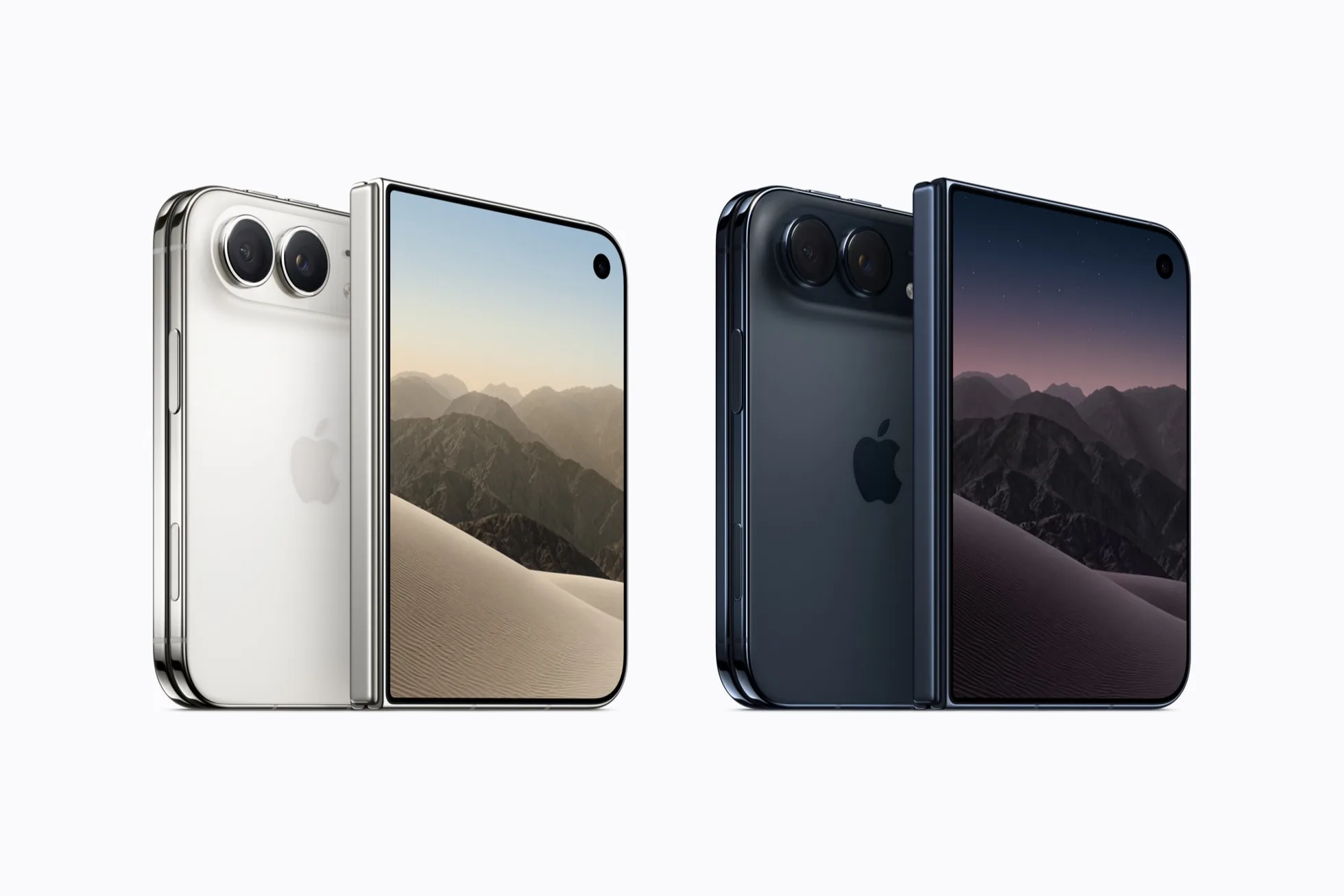
Apple has been removing the tray one model at a time. The iPhone Air, announced on 9 September 2025, has what Apple calls “an eSIM-only design.” The iPhone Duo, Apple’s foldable announced on 9 September 2026, goes further: Apple’s press release says it “features an eSIM-only design worldwide.” Pre-orders open on 16 October 2026 and availability begins on 23 October 2026, according to the same release.
The Pro line is split by market. Apple’s iPhone 18 Pro announcement lists the places where eSIM-only versions of the 18 Pro and 18 Pro Max are sold: Bahrain, Canada, Guam, Japan, Kuwait, Mexico, Oman, Qatar, Saudi Arabia, the UAE, the U.S. and the U.S. Virgin Islands. Buy the same phone in the UK or Australia and it still has a tray.
China does not bring the tray back. Apple’s China mainland eSIM page says the iPhone Duo and iPhone Air “activate by eSIM only” there too. So if you bought either phone anywhere, or a Pro model in one of those twelve markets, the plan in this guide is the one you need. If you are not sure, look along the edge of the phone: no small pin-hole tray means no physical SIM. Our iPhone 18 Pro eSIM-only guide covers the wider travel changes.
Can a foreign-bought iPhone use a Chinese carrier’s eSIM?
No, and this is the single fact that shapes everything else. Apple’s support page “Using eSIM with your iPhone in China mainland,” published on 9 September 2026, lists five models that support eSIM in China mainland and then says: “Other iPhone models, including those purchased outside of China mainland, are unable to install an eSIM profile from carriers in China mainland.”
Apple’s travel eSIM page, published on 17 September 2026, says it again: “You cannot use an eSIM from a China mainland carrier on a device purchased outside of China mainland.” The same page points visitors the other way: “If you are visiting China mainland and want to use a prepaid data eSIM, there are many plans offered by worldwide service providers.”
China Mobile, China Telecom and China Unicom all support eSIM, but only on iPhones bought in the mainland. Even for those phones, Apple says activation means visiting the carrier’s store, where staff carry out “a required ID check.” A visitor walking into a China Mobile shop with a US iPhone Duo cannot leave with a local eSIM, because the phone itself will not accept that profile.
With a phone that has a tray, the old fallback was to buy a local nano-SIM at the airport. An eSIM-only phone has nowhere to put one. That leaves two ways to get mobile data in the mainland:
- Roam on your home carrier’s plan, if it includes China and you accept its daily or per-megabyte price.
- Install a travel eSIM sold outside China, which connects to Chinese networks as a roaming line.
The rest of this guide is about the second route.
Why install the travel eSIM before you land?
Apple’s China page has a second line that matters here. In its section on travel, it says: “eSIMs from non-China mainland carriers can’t be installed while located in China mainland.” Apple writes that about iPhones bought in the mainland, and the page does not say whether the same block applies to a phone bought elsewhere. We could not test it, and we would not plan a trip around the hope that it doesn’t.
The safe order is simple. Install the eSIM at home, on Wi-Fi, a day or two before you fly. Apple’s travel eSIM page says the iPhone must be connected to Wi-Fi or a hotspot to activate an eSIM in most places, which is one more reason to do it before you leave rather than at a terminal in Beijing or Shanghai.
Installing early does not waste days on most China plans. Our catalog records when each plan’s validity starts:
| When validity starts | All plans covering China | Single-country China plans |
|---|---|---|
| On first data use | 70 | 26 |
| On connecting to a network | 21 | 5 |
| On installing the eSIM | 12 | 0 |
| On purchase | 13 | 0 |
| Total | 116 | 31 |
All 31 single-country China plans wait until you are on a network or start using data. Some regional and global packs start the clock at purchase or installation, so check that line on the product page if you are buying one weeks ahead. Our guide to when travel eSIM validity starts explains each rule.
There is a third reason to think about this before you go: running out mid-trip. If installing a new profile in China is blocked or unreliable, a plan you can top up is worth more. A top-up adds data to the line you already installed instead of downloading a new eSIM. Of the 21 single-country China plans you can buy as a new line, 8 accept top-ups: the four NextLink “China Special” plans and four Airalo plans. The RoamVault and TSimTech plans, and Airalo’s unlimited-day plans, do not. If you pick a plan that cannot be topped up, buy one size bigger than you think you need.
What does a China travel eSIM give you, and what doesn’t it?

It gives you mobile data. It does not give you a phone number. Of the 116 plans in our catalog that cover mainland China, none includes SMS and none includes calls. That is not a gap in one supplier’s range; it is true of every China-covering plan we list.
On a phone with a tray, that rarely mattered, because people kept their home SIM in the slot. On an eSIM-only phone, your home number is also an eSIM, and keeping it switched on is now a deliberate step (covered in the next section).
The second thing to know is where your data goes. A travel eSIM in China is a roaming line, and our catalog records the country where each plan’s traffic leaves the network and joins the public internet. For the 21 single-country China plans you can buy fresh, 13 declare an exit point: nine in Hong Kong and four in Singapore. Across all 116 China-covering plans, 71 declare one, and none of them exits inside mainland China. The other 45 declare nothing, and a blank means unknown, not local.
We report that field as a fact about routing. We do not promise that any particular app or website will load, because that depends on things outside our data. Our China eSIM exit point guide goes through those numbers in detail, and the IP address and exit country guide shows how the same field looks across the whole catalog.
Every single-country China plan in our catalog allows hotspot use, so one eSIM-only phone can share its data with a travel companion’s tablet or laptop.
How do you keep your home number for text codes?
Bank logins, airline check-ins and many app sign-ins send one-time codes by text to the number you registered. A data-only travel eSIM has no number to receive them. So you want your home line active for texts while the travel eSIM carries the data.
Apple supports exactly this. Its travel eSIM page says “you can have two eSIMs active at the same time on supported iPhone models,” and gives the example of one eSIM for your home number and another for the place you’re visiting. Its eSIM setup page says an iPhone can hold “up to eight or more eSIMs,” but only two are active at once. Apple’s Dual SIM page adds that the iPhone uses one cellular data network at a time. On iOS 26 and later, the travel eSIM prompt asks whether to use the travel eSIM only or both lines. Apple says that with both lines on, “your travel eSIM will be used for data,” and adds: “You might still incur roaming fees from your home eSIM.”
The settings that make this work:
- Label the lines. After installing, label the travel eSIM something like “China data” so you can tell them apart.
- Set Cellular Data to the travel eSIM. In Settings, Cellular, choose the travel line for data.
- Turn off Allow Cellular Data Switching. Apple describes this option as letting the iPhone use data from both plans depending on coverage. Leave it off so data never drifts onto your home line.
- Turn data roaming off on the home line. It stays on for calls and texts, which your home carrier may still charge for while roaming, so check its rates for receiving texts in China.
- Turn data roaming on for the travel eSIM. It is a roaming line by design and will not connect without it.
If your home carrier charges per text received abroad, a few verification codes will cost little. The expensive mistake is letting data run over the home line.
Which plan fits your trip length?
Here is the full calculator table for mainland China, matched to the cheapest single-country plan in our catalog that covers the top of each range. All of these last at least as long as the trip.
| Trip | Light use | Plan and price | Moderate use | Plan and price | Heavy use | Plan and price |
|---|---|---|---|---|---|---|
| 3 days | 1–2 GB | China Short Trip 3 GB, 5 days, $5.49 | 2–4 GB | China 5 GB, $7.49 | 5–8 GB | China 10 GB, $11.99 |
| 7 days | 2–3 GB | China 5 GB, $7.49 | 4–7 GB | China Special 7 GB, $10.99 | 9–15 GB | China 15 GB, $15.99 |
| 10 days | 3–5 GB | China 5 GB, $7.49 | 6–10 GB | China 10 GB, $11.99 | 13–20 GB | China 20 GB, $17.99 |
| 14 days | 4–7 GB | China Special 7 GB, $10.99 | 8–14 GB | China 15 GB, $15.99 | 18–28 GB | China 30 GB, $29.99 |
| 30 days | 8–15 GB | China 15 GB, $15.99 | 15–25 GB | China 30 GB, $29.99 | 30–50+ GB | China 50 GB, $37.99 |
Plans without a stated length run 30 days. Only China Special 7 GB in this table can be topped up; the others are RoamVault and TSimTech plans. If you are on the line between two sizes and the bigger plan cannot be refilled, take the bigger one.
Video calls home add up fastest. If you work remotely from China or share the data by hotspot, plan from the heavy column.
What if your trip includes Hong Kong or Macau?
Hong Kong and Macau are separate markets with their own networks, and a mainland-only plan does not cover them. Of the 116 plans covering mainland China, 73 also include both Hong Kong and Macau. The cheapest 10 GB, 30-day option in that group is the Greater China and Taiwan Premium pack at $16.99, which covers four places and exits in Macau. The cheapest mainland-only 10 GB plan is $11.99, so the multi-region pack costs $5 more for the extra coverage.
If Hong Kong is a short stop, you can also buy a separate plan from the Hong Kong plans page and install both before you fly. An iPhone stores far more eSIMs than it runs, so you can switch the active data line when you cross. Apple’s two-eSIM storage limit applies to iPhones bought in the mainland; for other iPhones, Apple’s setup page gives eight or more.
What should you set up before the flight?
Run through this at home, the day before you leave:
- Check the phone is unlocked. Apple’s travel page says to look for “No SIM Restrictions” next to Carrier Lock in Settings, General, About.
- Buy the plan and install the eSIM from the QR code over Wi-Fi.
- Label it and set it as the data line, with data switching off.
- Leave the travel line switched off until you land, so nothing counts against the plan before the trip.
- Save the QR code email and the plan’s support contact somewhere you can reach offline.
- Make sure your home line is on and data roaming is off for it.
When you land, switch on the travel line, turn on its data roaming, and wait a minute for it to find a network.
FAQ
Can I buy a China Mobile or China Unicom eSIM for my iPhone Duo when I arrive?
Not with an iPhone Duo bought outside mainland China. Apple’s China mainland eSIM page says iPhones purchased outside the mainland cannot install an eSIM profile from Chinese carriers. Plan on a travel eSIM bought before the trip.
Can I install a travel eSIM after I arrive in China?
Do not count on it. Apple says eSIMs from non-mainland carriers cannot be installed while in China mainland on iPhones bought there, and does not say whether phones bought elsewhere are affected. Install before you fly to remove the risk.
Do China travel eSIMs come with a phone number?
No. All 116 plans in our catalog that cover mainland China are data-only, with no SMS and no calls. Keep your home number active as a second eSIM for text codes.
Will my home number still receive texts in China?
It can, if the home line stays active and your carrier supports roaming in China. Apple supports two active eSIMs at once, so the home line handles calls and texts while the travel eSIM handles data. Check your carrier’s charges for receiving texts abroad.
Which China plan should I buy for a week?
China Special 7 GB at $10.99. It covers the 4–7 GB moderate range for seven days, lasts 30 days, allows hotspot use and can be topped up if you run short.
Conclusion: decide before you pack
An eSIM-only iPhone removes the airport SIM shop from a China trip. Apple says a foreign-bought iPhone cannot take a Chinese carrier’s eSIM, so the only plan that works is the one you install before you fly. Pick a size from the table, choose a rechargeable plan if you might run short, and keep your home number on as a second line for codes.
Before you buy, confirm
- Your iPhone is unlocked (“No SIM Restrictions” in Settings, General, About).
- The plan covers mainland China, and Hong Kong or Macau if you are going there.
- The data and the days cover your trip.
- Whether the plan can be topped up, if you might run short.
- When the plan’s validity starts, if you are buying well before departure.
Soft next step
Affordable travel eSIM, refund if no code in 1 hour. The catalog lets you filter by destination, data and days, and the China plans page lists every mainland plan side by side. Plan details change, so treat the live listing on each product page as the source of truth before you buy.